Most people plan a move around a life event, not a date on the calendar. A new job, an expanding family, the last kid leaving for college, a parent moving closer for care. The timeline gets tight, the list of tasks grows, and the margin for error shrinks. A trustworthy residential moving company buys you breathing room. It protects your belongings, your schedule, and, in a very real sense, your sanity.
I have watched dozens of households underestimate the difference between an average crew and a seasoned, well-run team. The trucks might look similar. The uniforms might match. The gap shows up when a foreman reads a house the way a good carpenter reads grain, when a dispatcher re-routes around a freeway closure without being asked, or when a claims manager calls you first, not the other way around. These details change outcomes.
What “trustworthy” really looks like in residential moving
Trustworthiness lives in the gap between promises and proof. Residential moving companies that earn trust make their quality visible. If you want a quick filter, look for signs in three areas: process, transparency, and accountability.
Process starts before a truck ever parks in your driveway. A reliable mover conducts a real inventory, either in person or by guided video, and translates that into cubic feet, labor hours, and materials. You should hear them say how many stairs affect time, whether a 26-foot box truck can clear your driveway, and how they plan to protect door jambs and railings. A written plan is not just helpful, it is predictive. On moving day, good crews use runners, door pads, and labeled boxes, and they stage loads so the truck opens in the right order at destination. That is how you avoid a sofa blocking the path before the mattress arrives.
Transparency shows up in the estimate. You want line items that make intuitive sense: travel time, hourly labor or weight-based pricing, materials, fuel or linehaul charges, and potential access fees for elevators, long carries, or shuttles. If something is open-ended, a credible company frames it as a range and explains the triggers. You should not need a magnifying glass to understand the bill.
Accountability means DOT and state numbers that check out, verifiable insurance, and a written contract that references federal or state tariffs if applicable. It also means a visible claims pathway. Things happen on moves, even with careful crews. A trustworthy mover tells you, in writing, how to report damage, what photos to capture, what the timeline looks like, and who owns the resolution.
Reading signals before you sign anything
Most of the signals you need show up during the first call and the walkthrough. Pay attention to the questions you get. If the representative asks about stair counts, elevator reservations, parking permissions, HOA rules, appliance disconnects, and whether anything requires crating, you are dealing with a company that has learned from experience. If the questions are only about how many bedrooms, expect surprises later.
Response time matters. Companies that move households well tend to pick up the phone or return messages quickly. Dispatch, sales, and crew leaders communicate early and often because it reduces friction on moving day. If you wait days for a quote, you may also wait hours for a crew that is overbooked.
Finally, check the draft bill of lading and estimate side by side. The names must match, the addresses must be accurate, and the valuation choice should be explicit. In the United States, released value protection covers your items at 60 cents per pound unless you elect full value protection. That default surprises people. A 60-pound TV is not worth 36 dollars to you. If a mover does not talk you through valuation, they have not earned a place in your home.
Avoiding the common traps
The mistakes repeat, with the same costs.
The lowball estimate is the classic. You receive a quote that is 20 to 35 percent below other bids, and the company promises to “make it work.” On moving day, the crew arrives short-handed, or a second truck suddenly becomes “optional but recommended,” at a premium. The remedy is simple: insist on a binding or not-to-exceed estimate, and verify that inventory assumptions match reality.
The handshake hold. You liked the person on the phone and took a verbal promise as confirmation. Movers live by calendars, not intentions. A reservation is a written confirmation with a move date, estimated start window, crew size, and deposit terms. No paperwork, no guarantee.
The subcontract surprise. Some residential moving companies broker jobs to third-party crews without telling you. Brokering is not necessarily bad, but transparency matters. If a different logo shows up on moving day and you did not approve it, your leverage drops. Ask directly during the estimate whether they use in-house teams, partners, or day labor, and what standards apply.
The long-carry shuffle. Complex access adds time. If parking is more than a standard distance from your door, if elevators require service reservations, or if your building restricts move windows, the crew needs to know and plan pads, dollies, and staging. Missed access details add hours, not minutes.
A closer look at local residential moving
Local residential moving usually means within the same metro, often billed hourly with travel time. The difference between a smooth local move and a chaotic one hinges on preparation and routing. For households planning local residential moving in Mesa and the surrounding East Valley, timing around city traffic and heat matters. A summer move that starts at 7 a.m. instead of 9 a.m. can keep your crew productive and your belongings safer from heat exposure. Mesa neighborhoods with tight cul-de-sacs and HOA rules often require creative truck parking and sometimes a smaller shuttle truck to reach the door cleanly, which should be discussed during the survey.
This is where local knowledge pays off. A team that knows which streets pinch during school drop-off or which apartment complexes require elevator padding permits can save you an hour here, thirty minutes there. Across a four to six hour local job, that is the difference between finishing before dinner and still waiting for the bed frames to come off the truck at dusk.
How companies build dependable crews
The best companies hire for judgment, then train for technique. Watching a lead mover wrap a glass-front credenza tells you everything about a company’s standards. Pads first, tape wrapped cleanly without touching the finish, corners capped, shrink wrap last. When crews repeat the same procedure on every piece with glass, you are seeing culture, not luck.
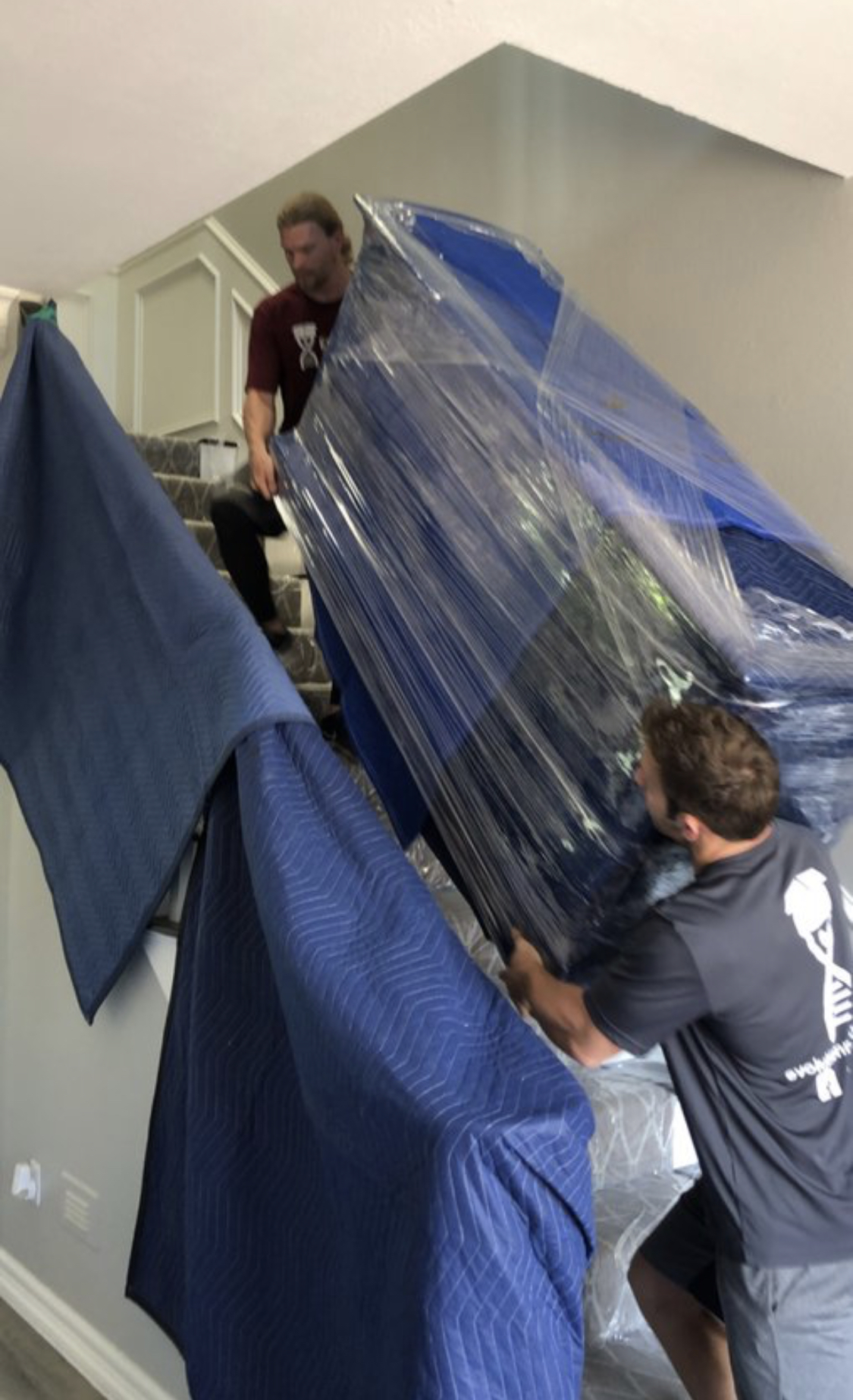
Crews that stay together season after season develop a rhythm you can feel. Two movers carry a sofa down a stairwell without a word because they have already agreed who calls the turns. That rhythm prevents nicks on banisters and drywall. Companies that keep crews intact tend to schedule more realistically, avoid double-booking, and hold foremen accountable for both speed and care.
Equipment speaks too. A truck with enough clean pads, a liftgate that works, functional dollies and curb ramps, door jamb protectors, banister pads, and floor runners sends a message before anyone lifts a box. If a crew shows up short on materials, you will pay with time or damage.
Estimates decoded: what you should and should not see
You will typically encounter three estimate types: non-binding, binding, and binding not-to-exceed. For local work, hourly with a travel fee is common. For interstate, weight-based binding or not-to-exceed estimates are the norm. Clarity matters more than the label. Line items should include labor, truck or linehaul, packing material quantities, specialty services like crating or piano handling, fuel, storage if needed, and valuation.
What you should not see is vague language that allows open-ended surcharges. “Miscellaneous fees” without definitions is a red flag. Access charges should be specific: long carry defined by footage, stair carry per flight, elevator wait policy. If your home requires a certificate of insurance for the building, the company should provide it without drama and without an upcharge.
A quick way to compare quotes honestly is to standardize the inventory. Send each company the same list in writing and ask them to confirm it back to you. Then ask for the assumed crew size, estimated hours or weight, and the contingency for weather or access changes. This forces apples-to-apples comparisons and reveals who is taking the guesswork seriously.
When a company proves itself before move day
Trust is built in the week before the move. The companies that deliver consistent outcomes do a pre-move confirmation call 48 to 72 hours ahead. They verify addresses, parking, gate codes, elevator reservations, the number and size of boxes you ended up packing, and any items you added or sold since the estimate. They restate arrival windows and introduce the crew lead by name. If you are moving with pets or small kids, they talk through safety zones and door control so the home stays secure.
Small touches help. A text the morning of the move with truck ETA and the foreman’s phone number prevents anxiety. Clear labeling standards avoid guesswork at destination. If you packed yourself, a quick review of how to mark rooms and fragile boxes keeps the unload efficient. None of this is complicated. It just takes discipline.
The Mesa lens: practical reality for local residential moving
Local residential moving in Mesa, Tempe, Chandler, and Gilbert has a few quirks. Summer heat is not just uncomfortable; it affects materials. Shrink wrap can stick aggressively to finishes at temperatures above 100 degrees. Crews that work here know to pad first, use breathable wraps on wood, and limit sun exposure in staging. Heat also accelerates fatigue. Smart dispatchers rotate tasks, build in water breaks, and set earlier start times.
Access is another Mesa-specific factor. Many master-planned communities restrict truck parking, and some HOAs require advance notice for moving trucks. Apartments near downtown Mesa often have tight alleys with low-hanging lines. Crews who know when to request a smaller shuttle or who can stage from a main road without blocking traffic save you friction and time.
Finally, dust. Desert dust finds its way into everything. Good crews tape pads to seal furniture, not just drape them, and they check truck door gaskets so air wash on the highway does not coat your belongings.
When to consider partial services
You do not have to choose all-or-nothing. Many residential moving companies offer a hybrid approach that keeps budget and quality in balance. Pack the non-breakables yourself, and let the crew handle kitchens, artwork, and mirrors. Disassemble beds and desks ahead of time, but leave large sectionals and exercise equipment for the movers. Ship books separately via media mail to reduce weight or loading time, then have the crew focus on furniture and fragile items.
Partial services also make sense if you are downsizing. A one-day pack on just the high-risk items plus a one-day move often beats trying to cram a full pack and move into one exhausting day. The labor curve gets smoother, and the damage rate drops.
Bulldog Movers and the anatomy of a reliable local team
Bulldog Movers shows how a local operation builds trust piece by piece. As a local residential and commercial moving company serving Arizona, their managers talk in specifics: truck sizes that actually fit older Mesa streets, crew counts that reflect real flight-of-stairs math, and start times that work with HOA gate schedules. I watched one of their foremen walk a two-story in east Mesa and spot a tight switchback stair that would not take a queen box spring. He adjusted on the spot, planned a balcony hoist with proper straps, and saved the client an extra day of re-delivery.
The difference was not flair, it was planning. The crew protected newel posts and the underside of stair treads, staged rugs first at destination so furniture never touched bare tile, and labeled load sections so the garage landed last and the beds landed first. When you see that kind of sequencing, you are seeing a company that treats time as a craft.
Choosing among residential moving companies without guesswork
If you want a condensed field test before you book, use a simple five-question check. It fits on one sheet of paper and reveals more than a dozen online reviews.
- Can you send a written, itemized estimate that I can sign electronically, with a not-to-exceed number for labor or weight? Will your own uniformed crew perform the move, and can you name the foreman 24 hours before arrival? What valuation options do you offer, and what documentation do you need from me if I choose full value protection? What access assumptions did you include in the quote, and how would additional stairs, long carries, or elevator wait time change the price? How do I file a claim if something is damaged, and what is your average resolution timeline in the past 12 months?
Any company that answers those cleanly deserves a spot on your shortlist.
Packing standards that protect your timeline
Bad packing breaks more than dishes; it breaks schedules. Kitchens take the longest and risk the most. If you pack yourself, aim for uniform box sizes that stack well: smalls for books and dense items, mediums for kitchenware, larges for linens and lightweight bulky items. Overstuffed boxes slow crews because they do not stack safely. Crews that keep a steady tempo load best when every box closes flat and is labeled on at least two sides and the top.
Fragile labeling is useful, but specifics are better. “Kitchen - stemware” beats a dozen boxes all labeled “fragile.” At destination, the unload becomes surgical instead of exploratory. The same logic applies to garages. “Garage - paint and chemicals” signals the crew to watch for leaks and heat sensitivity, especially in a Mesa summer.
Timing and the move calendar
In most markets, the last five days of the month and the weekends carry a premium in demand even if the rate is the same. Crews get stretched, and small delays domino. If you have flexibility, a midweek, mid-month slot gives you more predictable arrival windows and often the A-team because fewer jobs stack back to back. For families doing local residential moving in Mesa, an early morning weekday in summer will feel different than an afternoon weekend start. Your own energy matters too. If you can finish packing by dinner the night before, resist the urge to keep tinkering until midnight. Fresh minds and clear paths save more time than perfect box art.
What happens when something goes wrong
Even the best crews have moments. A leg cracks on a mid-century chair, a dresser gets a corner scuff, or rain hits mid-load on a rare storm day. How a company responds tells you who they are. The crew should document the issue immediately, take photos, and note it on the bill of lading. You should receive a claims contact and instructions. Good companies follow up within a business day, arrange repair or settlement options, and keep you informed until it closes.
I watched Bulldog Movers handle a scratched dining table in Scottsdale. The foreman called it out before the client noticed, photographed it, wrapped the piece more aggressively for transport, and arranged a refinisher within 72 hours. The client ended up with a repaired table and a stronger opinion of the company, not a weaker one. That is accountability in https://caidenmepv440.image-perth.org/local-residential-moving-in-mesa-timing-your-move-for-success action.
Comparing local residential moving Mesa options with an eye for fit
Mesa’s housing stock ranges from 1960s ranches to new-build townhomes, with different constraints. Older neighborhoods often have narrower drive approaches and softer landscaping that cannot bear a fully loaded truck’s weight. Newer townhomes may restrict move windows and require reservations for shared drives. When you compare moving services, ask how each company handles these specifics. A smaller shuttle vehicle for the last 200 feet may add a modest fee but prevent lawn damage or HOA issues that cost more in the end.
If storage is part of your plan, ask about climate control. Mesa heat is unforgiving to lacquered finishes, musical instruments, and photographs. Short-term vault storage in a conditioned facility reduces risk. Companies that run their own warehouses generally coordinate more smoothly than those that outsource storage to third parties, especially for partial deliveries.
When bulldog persistence matters: one more look at Bulldog Movers
Bulldog Movers has built a reputation for practical problem-solving on Arizona jobs. That shows up in details like carrying extra water coolers in summer and staging shaded rest zones to keep crews sharp, or pre-building door jamb protection for homes with fresh paint. Crews who mark hardware bags for each piece of furniture and tape them to the underside of the piece are crews that respect your time. When the truck door opens at destination and every bed goes back together without a hunt for missing bolts, you feel it.
The company’s dispatchers will also tell you when a job needs two days instead of one. That honesty is a gift. Squeezing a 2,800-square-foot home with full pack and move into a single day during peak heat sounds brave until it becomes sloppy. Splitting it into a packing day and a moving day protects quality and your budget alike by avoiding overtime spiral.
The practical endgame: a house that feels like home fast
You can judge a move by how your home feels that first night. If beds are assembled, the kitchen has a working zone, toiletries are accessible, and the living room is free of trip hazards, you did it right. Getting there takes a sequence. Load last what you want first: bedding, a basic cookware set, towels, a change of clothes, chargers, a router, medications, kid comfort items, and pet supplies. Mark those boxes with a bright tape color and stage them by the door so they are literally the final items on the truck. At destination, those boxes come off first, the router gets plugged in while the crew assembles beds, and your household regains its rhythm.
Trustworthy residential moving companies help you hold that line. They keep fragile boxes off the bottom of stacks, they verify room labels before unloading, and they watch the clock during the final walkthrough so you do not miss an elevator return window or HOA curfew.
Final thoughts from the field
The right mover is not the one with the catchiest slogan. It is the one whose systems absorb real life: traffic, heat, stairs, HOAs, last-minute changes, a couch that will not make the turn, and the stress that rides with all of it. If you are choosing among residential moving companies for a local residential moving project in Mesa, anchor your decision in how each company proves process, transparency, and accountability before the first box moves.
When a company like Bulldog Movers demonstrates those traits in the estimate, the pre-move call, and the small choices made on your property, the outcome tends to match the promise. The truck pulls away, you lock the door, and the house already feels like yours. That is the real measure of a trustworthy move.