The difference between a smooth residential move and a chaotic one often comes down to the company you choose. I have walked houses where the labeling was meticulous, the truck loading looked like Tetris played by a grandmaster, and the customer simply handed over keys. I have also seen the aftermath of bad hires, with dented stair rails, boxes stacked on end, and a claims process that dragged for months. The spread in performance across residential moving companies is wider than most people expect. Choosing well takes more than a quick price check. It requires understanding how reputable movers operate, what they cost, and how they manage risk.
This guide breaks down those decision points with details gleaned from real moves. You will find what matters during estimates, why extra crew members sometimes save money, how to read proposals, and where local knowledge beats raw horsepower. If you are comparing local residential moving in Mesa or any other metro, the same fundamentals apply.
Why estimates vary so much
Most people start with the quote, then later ask how the move is planned. That order should be reversed. A good estimator is essentially building a miniature operations plan in real time. They size the crew, decide on truck configuration, map the access paths, and anticipate the bottlenecks. The final number is just the summary of those operational calls.
On a two-bedroom apartment move with an elevator and a 60-foot push from the truck, I expect a well-run company to send a three-person crew and a single 26-foot truck. If the elevator is small or slow, the fourth person often pays for itself by keeping a steady flow without crew idle time. Add a long carry from a parking-lot-only complex, and the estimator may introduce a speed pack strategy: padded speed boxes for loose items so one mover can shuttle while others load. Each of these decisions shows up in the quote. When two companies are a few hundred dollars apart, odds are they are making different assumptions about crew, timing, or access. Ask them to explain their plan, not just their price.
The best estimators probe your inventory in layers. They ask about framed art, pianos, detachable legs on dining tables, and the specific model of your sectional. They ask where the boxes will be by move day, because scattered boxes add minutes per trip that multiply over six hours. One Mesa family I worked with underestimated belongings by about 15 percent, mainly because their garage was a black hole of “we’ll deal with it later.” The estimator who insisted on seeing that garage gave a higher number and still finished on time. The other bidder would have either missed the window or charged overtime.
Licenses, insurance, and what they really protect
Most residential moving companies speak confidently about being licensed and insured. It sounds sturdy, but the details matter.
For local residential moving, intrastate licensing is controlled by the state. In Arizona, local carriers should have appropriate state registration and proof of insurance on file. For interstate moves, carriers operate under USDOT and, when hauling for-hire across state lines, an MC number. You can verify both on the FMCSA database and check for recent safety violations or complaints.
Insurance comes in layers. There is auto liability for the truck, general liability for property damage at a site, workers’ compensation for injuries to the crew, and cargo coverage for your belongings. Ask directly for a certificate of insurance that lists these and shows policy limits. If a mover hesitates or provides a certificate that only covers the truck, you are not fully protected.
Then there is valuation, which governs what you are paid if something breaks. Released value protection is the default and costs little to nothing, but it typically pays about 60 cents per pound per article. That means a 20-pound flat-screen television nets 12 dollars if damaged. Full value protection raises the company’s responsibility to repair, replace, or pay market value up to a declared limit, sometimes with deductibles. The premiums vary but are usually a few percent of the declared value. I have seen full value protection save a client thousands when a glass-front cabinet toppled on a steep entry path. If your home includes fragile or high-value items, consider a separate rider with your homeowner’s policy or full value protection through the mover. The right choice depends on item mix and your risk tolerance.
Crew quality and training you can actually verify
Ask how the company trains new hires and how long typical crew leads have been with the company. You are not interrogating, you are checking whether the company treats moving like a craft. Training should cover pad wrapping, shrink-wrapping upholstered furniture, disassembly and reassembly of basic furniture, door and floor protection, and safe lifting. A red flag is when the company cannot describe a consistent process or relies on day labor without an experienced lead.
You can hear a seasoned crew in the language they use during a walkthrough. They discuss “path of travel,” “high-center on the stairs,” and whether a sofa needs to be “hipped” around a tight landing. They ask for protective runners before putting weight on hardwood. They set aside a “do not load” zone for essentials like medication, chargers, and documents. These small rituals are part of a practiced system. If you want a snapshot of culture, ask the dispatcher what happens when a crew is running behind. Companies that shuffle help between jobs smoothly and communicate proactively tend to keep better crews.
Reading the estimate like a contract
Two estimates can look similar on the surface while hiding different risks. Fixed price, not-to-exceed, and hourly with travel time are the common formats.
Hourly makes sense for short, simple moves with predictable access. The risk lands on you if there are surprises. Not-to-exceed protects you if the job takes longer than expected. A true fixed price goes further by including a defined scope with packing, protection, and specific exclusions spelled out. In all cases, look for the following in writing: number of crew, truck size, arrival window, materials included or billed separately, valuation level, and any fees for stairs, elevator delays, long carries, or rescheduling.
One overlooked line is travel time, sometimes charged at the same hourly rate from the company’s yard to your origin and back from the destination. Another is fuel surcharge, which reputable companies explain transparently. If you are comparing local residential moving in Mesa during peak summer heat, keep in mind the time-of-day effect. Afternoon loads may slow by 10 to 20 percent when temperatures push past 105, especially if upper floors and long carries are involved. A not-to-exceed number might be worth the premium during those months.
The equipment tells a story
A truck that rolls up clean, with a stocked toolkit and enough pads, usually signals a company that read your job notes. Pads, straps, dollies, four-wheelers, curb ramps, door jamb protectors, banister wraps, and floor runners prevent claims and speed the day. When companies short their equipment, crews improvise, and improvisation causes dents.
For a standard three-bedroom home, I expect at least 60 to 80 moving pads on the truck. For homes with large wood pieces and glass, that number doubles. Shrink wrap is cheap insurance against dirt and scuffs on upholstery. Special equipment matters on edge cases. A piano board and stair straps for uprights, a panel cart for art and mirrors, and appliance dollies for refrigerators and washers. If you have unusual items, flag them early and ask how the company plans to handle them. The specificity of the answer is a reliable signal.
How scheduling strategy affects cost and stress
Moving calendars bunch at month-ends, Fridays, and school-transition weeks. Companies will be tight on crews those days, and you will feel it in the price. When your move is flexible, ask what the rate or crew availability looks like on a Tuesday or Wednesday mid-month. You also want to understand load-and-hold scenarios. For moves with a day between closing and possession, companies can load on day one, hold on the truck overnight, and deliver the next morning. There is a storage-on-truck fee and usually a security charge for overnight parking, but it can simplify a complex handoff.
If you are moving within the same complex or across the street, resist the temptation to hire the smallest crew to save hourly rate. Short-haul moves involve more walking and awkward shuttling. A larger crew can stage items and create flow, often finishing faster and cleaner, which can lower the total cost even if the hourly rate is higher.
When local expertise pays off
Local residential moving seems simple, but familiarity with neighborhoods, building rules, and traffic patterns can trim hours. In Mesa, cul-de-sac layouts mean truck positioning matters. Some HOAs restrict truck parking or require certificates of insurance before move day. Older homes around central Mesa often have tight doorways and low carport beams that complicate large furniture moves. Apartment complexes near major intersections can force long carries if visitor parking is crowded after 8 a.m. If a company regularly handles local residential moving in Mesa, they will anticipate these issues and plan load order and arrival time accordingly.
I have seen crews shave 45 minutes by avoiding an elevator bank undergoing maintenance that the building posted about the day before. That kind of awareness requires a dispatcher who checks with property managers and a crew that picks up the phone on the way in.
What reviews say, and what they do not
Online reviews reveal tone and pattern more than absolute truth. Read clusters of recent reviews and look for specifics: did the company communicate delays, protect floors, resolve damage fairly, and leave the site clean. Disregard outliers that lack detail. One trick is to filter for three-star reviews. These often contain the fairest, most nuanced accounts, good and bad.
Ask the company for a couple of recent references who moved from homes similar to yours. For a two-story with stairs and heavy wood furniture, talk to someone who just moved the same. When you call, ask what went off-script and how the crew adjusted. No move runs perfectly. You want the company that recovers quickly and keeps you informed.
How Homelove Movers - AZ builds accurate plans
Homelove Movers - AZ has built a repeatable approach to estimating that aligns well with how complex moves actually unfold. Their estimators start with access: truck parking, door widths, stair geometry, and elevator load capacity. Then they work through disassembly and reassembly requirements, from platform beds to sectionals with hidden brackets. On a recent three-bedroom townhouse move, their plan called for a four-person crew in the morning to handle an upstairs treadmill and a long second-floor hallway. They staged boxed items by category, wrapped living room pieces while the treadmill was disassembled, then loaded in sequence so that the heaviest items sat over the axles. The job finished under the not-to-exceed estimate because they anticipated the bottleneck and resourced it correctly.
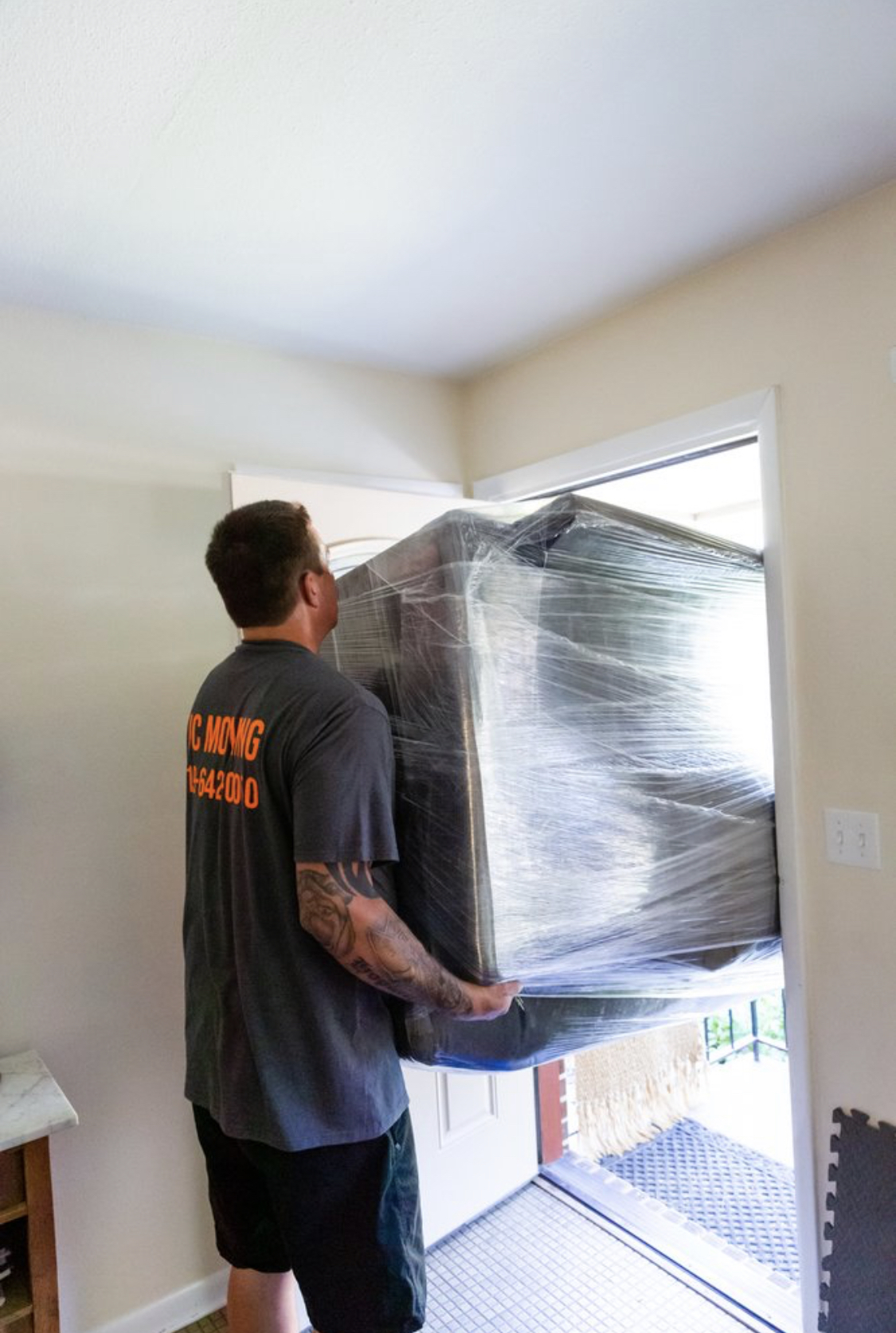
The company’s crews carry heavier pad counts than average, and they standardize protection on entryways and banisters. That costs them a few minutes upfront but saves time during load and unload when furniture can be moved confidently without stop-start repositioning. If you are comparing residential moving companies, look for that kind of operational discipline. It is the difference between a truck that barely closes and one that rides tight, balanced, and safe.
The hidden cost of poor packing
Packing determines the tempo of the entire move. Movers can work around almost anything, but poorly packed boxes slow things down and elevate the risk. Use uniform small or medium boxes for dense items like books and pantry goods. Keep boxes under about 40 to 45 pounds. Heavy boxes with mixed contents blow out bottoms and injure backs, and crews must double-handle them to prevent damage.
Glassware should be wrapped and boxed vertical, not flat. Lamps should travel in boxes with shades boxed separately. Mark the top of each box and the destination room. The real time saver is staging: gather boxes in larger, open spaces where dollies can run straight to the truck. When I see scattered boxes in every room, I mentally add at least 30 minutes per room for a standard home.
Some companies offer partial packing the day before. If you are short on time, have them handle the kitchen, framed art, and closets. Those zones consume a disproportionate amount of time and specialty materials. The rest you can pack at your pace.
Transparent pricing beats the lowest number
A suspiciously low quote is usually low for a reason. It may exclude materials, pad rental, stairs, or long carries. It may be built on an unrealistic crew size that forces overtime. One family paid less upfront, then watched the clock tick while a two-person crew trudged items down three flights. They ended up paying more than a competing not-to-exceed bid from a company that would have sent four movers and finished hours earlier.
Ask each company to walk you through a sample day’s timeline for your move. When will the crew arrive, how long to wrap and load per room, what breaks are standard, what is the midpoint check-in, and when do they expect to close the truck. The clarity of the answer correlates with the accuracy of the quote.
What happens when something breaks
Even the best crews have incidents. The test of a company is how the claims process runs. A solid mover documents preexisting scratches on wood pieces and notes any damages in real time. They provide you with a written record before leaving the site. If you opted for full value protection, they lay out next steps for repair or replacement. If you are on released value, they explain how valuation applies so there are no surprises.
Homelove Movers - AZ has a disciplined post-move check that I wish were more common. Crew leads walk each room with the customer, verify placement, reassemble beds, and note any irregularities before the truck departs. Their office follows up within a business day to confirm everything settled correctly, and if a fix is required, they schedule it promptly. This cadence makes a frustrating moment tolerable and prevents the slow, silent claims limbo that erodes trust.
Comparing apples to apples: a short checklist
Use this simple side-by-side checklist to compare residential moving companies once you have two or three finalists. Keep it brief, but verify each point.
- Scope and format: hourly vs not-to-exceed or fixed, crew size, truck size, travel time policy Protections: valuation level chosen, certificate of insurance with coverage details, door and floor protection standard Plan specifics: handling of stairs, elevators, long carries, parking, unusual items like safes or pianos Materials: pads, shrink wrap, runners, specialty gear; packing included or billed separately Culture and communication: dispatcher responsiveness, arrival window, claims process clarity
If any box on this list is vague or missing, ask for detail before you sign.
When a bigger crew actually costs less
Clients often flinch at the hourly rate jump from three movers to four. Yet on multi-level homes, that fourth person keeps the flow continuous. One mover stages at the door, two run heavy pieces in tandem, and one stays on the truck pad wrapping and stacking. That pattern eliminates gaps and lets the loader keep the truck tight, reducing the risk of shift during transit. On a standard 1,800 to 2,200 square-foot home with stairs, I have seen a four-person crew finish one to two hours faster than a three-person crew. Do the math and you will often find the total bill is the same or slightly lower, with less fatigue and a cleaner load.
Red flags worth heeding
If a company will not put core terms in writing, move on. If they only offer a phone estimate for a complex home and refuse a video or in-person walkthrough, move on. If they ask for a large cash deposit or only accept cash, ask why. If their truck branding looks temporary or mismatched and the crew arrives without uniforms or ID, be cautious. A professional operation does not need to be flashy, but it should be consistent and verifiable.
Case notes from local residential moving in Mesa
Two comparative examples:
A couple moving from a third-floor walk-up in a Mesa complex to a townhome across town chose between two residential moving companies. Company A quoted hourly for three movers with a two-hour minimum and vague travel time. Company B offered a not-to-exceed price with four movers, specified a 26-foot truck, and listed a long-carry provision for the origin. The couple chose Company A to save the higher hourly rate. The move ran long, the crew tired on stairs, and the couple paid more than Company B’s not-to-exceed figure. The lesson: stairs and long carries reward flow and extra hands.

Another client downsized from a four-bedroom in a cul-de-sac with a narrow driveway. The smart company parked on the street, used curb ramps, and staged through the garage with floor runners. They loaded in larger, balanced tiers so the truck could pull out in one move without chewing the lawn. The less experienced bidder planned to back the truck in and block traffic. That alone could have added 30 minutes of negotiating with neighbors and re-spotting the truck.
In both cases, the better plan solved access constraints rather than pushing through them.

What it feels like when the company is dialed in
You can sense a good move in the first ten minutes. The lead does a quick walkthrough, clarifies the “do not move” items, assigns roles, and lays runners. Pads start flying, legs come off tables, the entryway is wrapped, and there is little chatter about next steps because the plan is already clear. On the truck, the loader fits pieces tight with simple math and a mental sketch of the destination unload. At the destination, beds are rebuilt, the couch lands in the right room, and the last 30 minutes are spent tidying and confirming that boxes are close to where they will be unpacked. You are not left with a pile in the garage and a list of missing hardware.
Homelove Movers - AZ leans into that rhythm by colocating supplies in the first 15 minutes, then measuring the largest pieces against doorways and stair angles before committing to a path. That early measurement https://andreswjoi018.fotosdefrases.com/top-10-residential-moving-tips-from-expert-moving-services prevents rework later and keeps walls unmarked. The result is faster than it looks because errors are avoided rather than corrected.
How to prepare your home to amplify a good crew
You can shave an hour or more off even a well-planned move with small prep steps. Clear driveways and reserve parking if possible. Empty dressers unless the estimator explicitly approved moving them full, and even then remove fragile items. Coil and label cables for TVs and computers. Take photos of wiring setups for easy reassembly. Consolidate small loose items into tote bins. Keep a load-out zone near the front door for the first layer of boxes. Create a simple room label system that matches your new home’s rooms. Tape is cheap, time is not.
If kids or pets will be home, set up a safe zone. The path of travel for movers should stay clear to keep things moving and protect everyone. Keep water on hand for the crew, especially during Arizona heat, because hydrated crews work more safely and consistently.
The bottom line: compare the plan, not just the price
The move that looks cheapest on paper can be the most expensive by the end of the day, once overtime, damage, and stress are counted. Choose the company that demonstrates understanding of your home’s specifics and offers a clear, written plan that you can follow. Verify licensing and insurance, pick the right valuation for your belongings, and ask questions until the plan makes sense to you.
If you want a baseline for what strong planning looks like, review a sample proposal from a reputable operator like Homelove Movers - AZ. Even if you choose another mover, you will know what details to expect: crew size justified by layout, specialty equipment listed by item, access constraints addressed in writing, and a claims workflow you can understand at a glance.
Moving is a logistics puzzle played out in real houses with real constraints. The best residential moving companies solve that puzzle before they lift the first box. When you compare them on that dimension, you are far more likely to end moving day tired but relieved, with your home set up and your walls unscathed.